

HBN User Guide
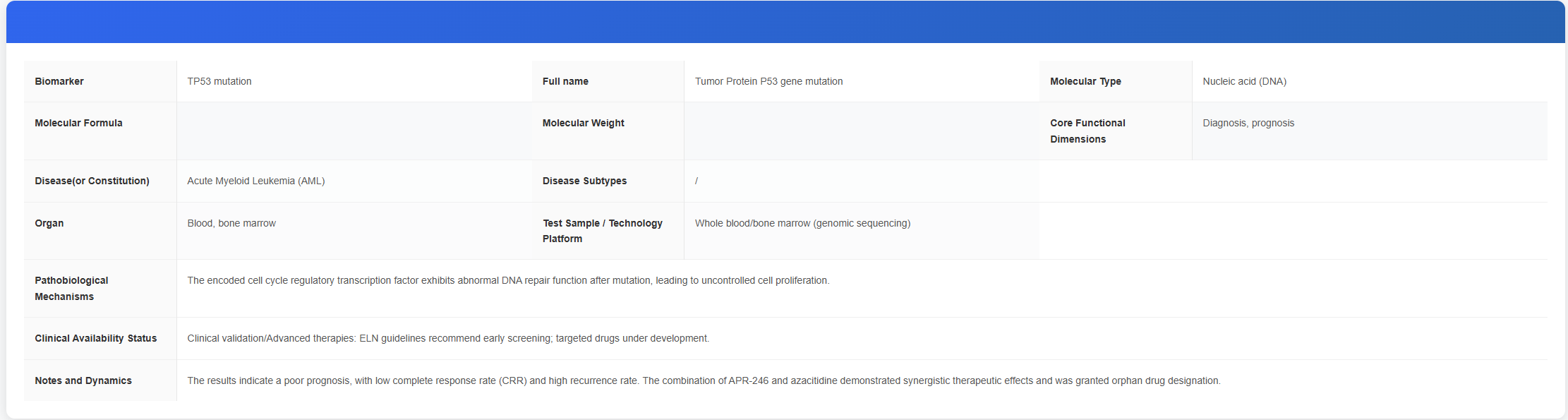
Human Biomarker Navigator is not only a comprehensive data repository, but also an intelligent retrieval and analysis platform designed for researchers and clinicians to systematically explore human health-related biomarkers. It enables in-depth study of biomarkers across multiple dimensions, including detailed molecular profiling, disease associations, organ specificity, and clinical relevance.
For each biomarker—such as the TP53 mutation illustrated in the example—our platform displays a structured profile encompassing:
• Biomarker Identity: name, full name, molecular type, and molecular weight
• Functional Dimensions: core roles in diagnosis, prognosis, or therapeutic guidance
• Disease Context: associated diseases (e.g., Acute Myeloid Leukemia) and subtypes
• Organ & Sample Information: related organs (e.g., blood, bone marrow) and recommended test samples or technology platforms (e.g., whole blood/genomic sequencing)
• Pathobiological Mechanisms: description of the biological dysfunction caused by the biomarker
• Clinical Status: availability, guideline recommendations, and therapeutic developments (e.g., targeted drugs in development, orphan drug designations)
• Notes & Dynamics: key findings such as prognosis impact, treatment responses, and combination therapy effects
Beyond individual biomarker lookup, Human Biomarker Navigator supports advanced cross-retrieval functions. Users can search biomarkers by organ, by disease, or by molecular type, and dynamically generate integrated Disease-Organ-Biomarker relationship maps. These visual networks help reveal systemic connections and support multidisciplinary research in biomarker discovery, clinical diagnostics, and personalized medicine.
To date, Human Biomarker Navigator has been increasingly adopted in biomedical research, aiding in the identification of diagnostic markers, therapeutic targets, and prognostic indicators across various diseases. Here, we provide a representative example to demonstrate how to utilize our platform for integrated biomarker exploration and network visualization (see TP53 mutation profile above).